Ophthalmic asset diligence
Could your existing lead candidate become a valuable ophthalmic asset?
We assess whether your drug, biologic or lead candidate has a credible route into ophthalmology, from discovery to an IND-ready plan, before you spend heavily on development.
How the engagement runs
Three tracks, with a decision after each. Stopping early is a valid outcome, and usually the cheapest one. We use software to search the literature faster, but the recommendation is ours.
Is the eye a credible target?
- Matching your mechanism to eye diseases it could treat
- Literature review and computational assessment
- Whether the drug can reach the target tissue in the eye
- A first read of the patent landscape
You get: a shortlist of indications, an evidence matrix, a risk register and a recommendation memo.
Prove it
- A plan for the safety, toxicology and efficacy studies
- Endpoints and acceptance criteria
- Writing the CRO brief, choosing the provider, overseeing the work
Who does what: we design the studies and oversee them. They run at CROs you contract directly.
Defend it
- IP strategy with your patent attorney
- A valuation model with every assumption written down
- Materials for investors and partners
Who does what: formal freedom-to-operate opinions and filings come from a qualified patent attorney, not from us.
A decision you can defend
Why the eye, and why us
Why the eye
Why us
- BiologyPhD, retinal degeneration
- DevelopmentPharma and biotech
- CommercialFounder who raised capital and secured IP
- StrategyRetail, government, pharma
- DecisionYour board can act on
How the engagement works
The first paid stepOphthalmic opportunity assessment
- For
- A biotech with a candidate or a mechanism in hand, considering an eye disease.
- You send
- A non-confidential summary to start. Data under a confidentiality agreement once we agree to proceed.
- We do
- We match your mechanism to the eye diseases it could treat, review the literature and run a computational assessment, work out whether the drug can reach the target tissue, and set out where it differs from what already exists.
- You get
- An indication shortlist, evidence matrix, risk register, recommendation memo and a readout meeting.
- Decision
- Proceed, pause until a named piece of evidence is in, or stop.
- Fee
- Fixed scope and fee, agreed before work starts.
- Not included
- Experimental results, formal patent opinions, or any guaranteed regulatory outcome.
Thirty minutes, no charge
No obligation either. Tell us the asset and the question, and we’ll say whether a Track 1 is worth doing. Sometimes it isn’t.
Stop after any track
No retainer, no minimum term, no notice period. Track 1 is a fixed fee agreed upfront; Tracks 2 and 3 are scoped only if you go ahead. CRO costs are quoted to you directly and passed through at cost. We don’t mark up lab work.
A handful of assets at a time
We work on a small number of assets at once. If we can’t give yours proper attention, we’ll say so rather than take it on.
Where to start
Send us a few details through the form. The first call is free and commits you to nothing, and half an hour is usually enough for a useful first read.
Pricing on request. Tell us the asset, the stage and the question, and we’ll send back a Track 1 scope with a fixed quote.
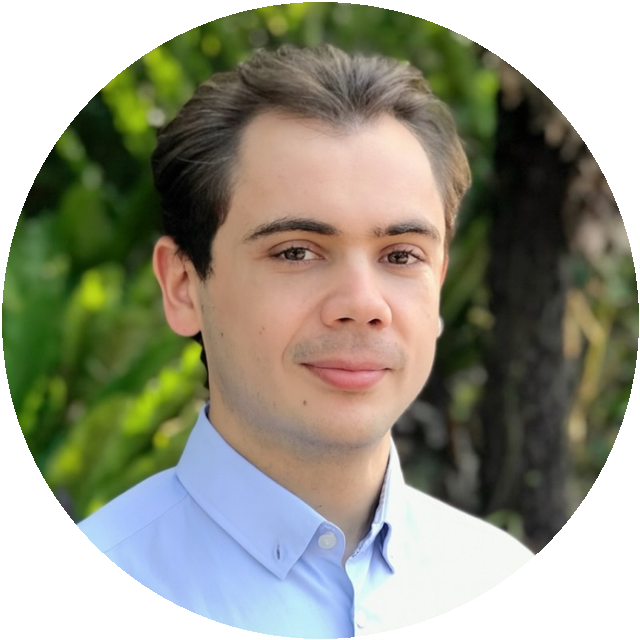
Managing Director & Founder
Dr. Adrian Cioanca
Retinal scientist (PhD, ANU), co-founder of a retinal therapeutics company that raised capital and secured patents, and strategy consultant across retail, government and pharma. I have built ophthalmic disease models for a global pharmaceutical company, and raised capital on the valuation models I now build for clients.
Full profile →If the decision is go
We can also help you carry it out.
After the assessment, we can design the validating studies and match you with specialist CROs. For organisations building ophthalmic capability in-house, we can set up disease modelling, imaging, molecular and analytics workflows on the infrastructure you already have.
Evaluate your candidate.
Tell us about your asset, and we’ll tell you whether the eye looks like a credible opportunity for it.
Get in touch → Book a time →adrian@tractumbio.com
The form takes a minute: the asset, its stage and the question you are trying to answer. Keep it non-confidential for now. The first call is thirty minutes, no charge and nothing locked in. We reply within two business days.